AHPRA-Compliant Healthcare Photography: What Melbourne Medical Practices Need to Know
Melbourne medical practices face a minefield when it comes to promotional photography. New AHPRA penalties of up to $60,000 per offence mean that one seemingly innocent before-and-after photo or patient testimonial could result in severe financial and reputational damage.
After two decades photographing healthcare professionals across Melbourne's major hospitals and private practices, I've seen the landscape shift dramatically. What was acceptable five years ago can now land your practice in serious trouble with the Australian Health Practitioner Regulation Agency.
Here's what every Melbourne medical practice needs to know about staying compliant with their promotional photography.
The Testimonial Trap:
Australia's Strictest Photography Rule!
The most common AHPRA breach I see? Patient testimonials paired with photography.
It seems harmless. A smiling patient, a glowing quote about their experience, perhaps a before-and-after image showing their transformation. It's compelling marketing that builds trust, right?
Wrong. It's completely prohibited under Section 133 of the National Law.
AHPRA's testimonial ban is absolute. You cannot use:
Patient quotes or reviews
Star ratings
Success stories
Before-and-after images with patient commentary
Any positive statement about clinical outcomes in your marketing
Even if patients volunteer testimonials or post rave reviews on Google, you cannot republish them on your website, embed them in marketing materials, or share them on social media. The moment you control or feature that content, you've breached advertising regulations.
This applies equally to third-party review platforms. While patients can freely post their opinions on Google Reviews, you as a practitioner cannot highlight, link to, or republish those testimonials in any promotional context.
The solution? (something Michelle from MMP studio can help you with) Focus your photography on professional documentation rather than patient praise. Show your expertise, your environment, your technology, and your compassionate approach to care through authentic imagery that doesn't require testimonials to build trust. I can help you with that!
Before-and-After Photos:
The Compliance Minefield
Before-and-after photography is where most medical practices stumble into non-compliance, particularly in cosmetic medicine and dentistry.
These images aren't banned outright, but the rules are strict and specific.
AHPRA requires before-and-after photos to be as standardised as possible:
Same patient (obviously)
Same lighting conditions
Same angle and camera distance
Same posture and positioning
Same background
No beauty filters or digital enhancement
No heavy makeup changes between shots
The difference shown must be purely due to the treatment itself, not photographic manipulation or presentation tricks. If you've used flattering lighting in the "after" shot and harsh lighting in the "before," that's considered misleading.
You must also include clear disclaimers:
"Results vary from person to person"
Disclosure of any image editing or retouching
Acknowledgment that the image represents one patient's outcome, not guaranteed results
From a photographer's perspective, this means planning these shots carefully. I work with practices to establish consistent photo protocols: fixed lighting setups, marked floor positions for camera placement, and standardised patient positioning. This isn't just about compliance—it's about creating credible documentation that accurately represents your work.
What you absolutely cannot do:
Cherry-pick only your best results
Use different lighting to exaggerate the transformation
Apply filters or excessive retouching without disclosure
Imply that these results are typical or guaranteed
Medical Board guidance explicitly warns against creating "unreasonable expectations of beneficial treatment." Your before-and-after photography should inform, not promise.
Privacy Protection in Clinical Photography:
Authentic Without Identification
One question I'm asked constantly: "How do we show authentic patient care without violating privacy?"
The answer lies in strategic framing and positioning.
AHPRA-compliant patient scenarios use these techniques:
Over-the-shoulder perspective: Photograph from behind the patient, showing the practitioner's face and interaction while keeping the patient anonymous. This captures genuine consultation moments without privacy concerns.
Back-of-head and hands-only shots: Focus on the practitioner demonstrating examination techniques, with only the patient's hands or back of head visible. This maintains authenticity while protecting identity.
Volunteer colleagues as patients: Many of my shoots involve anaesthetists, practice managers, or other staff members volunteering as patient stand-ins. This allows us to capture realistic consultation and procedure scenarios. When staff are identifiable, we complete proper model release forms documenting their consent and the intended usage.
Environmental portraits without patients: Showcase the practitioner in their clinical environment—reviewing imaging, preparing equipment, or demonstrating techniques on anatomical models. These images communicate expertise without requiring patient involvement.
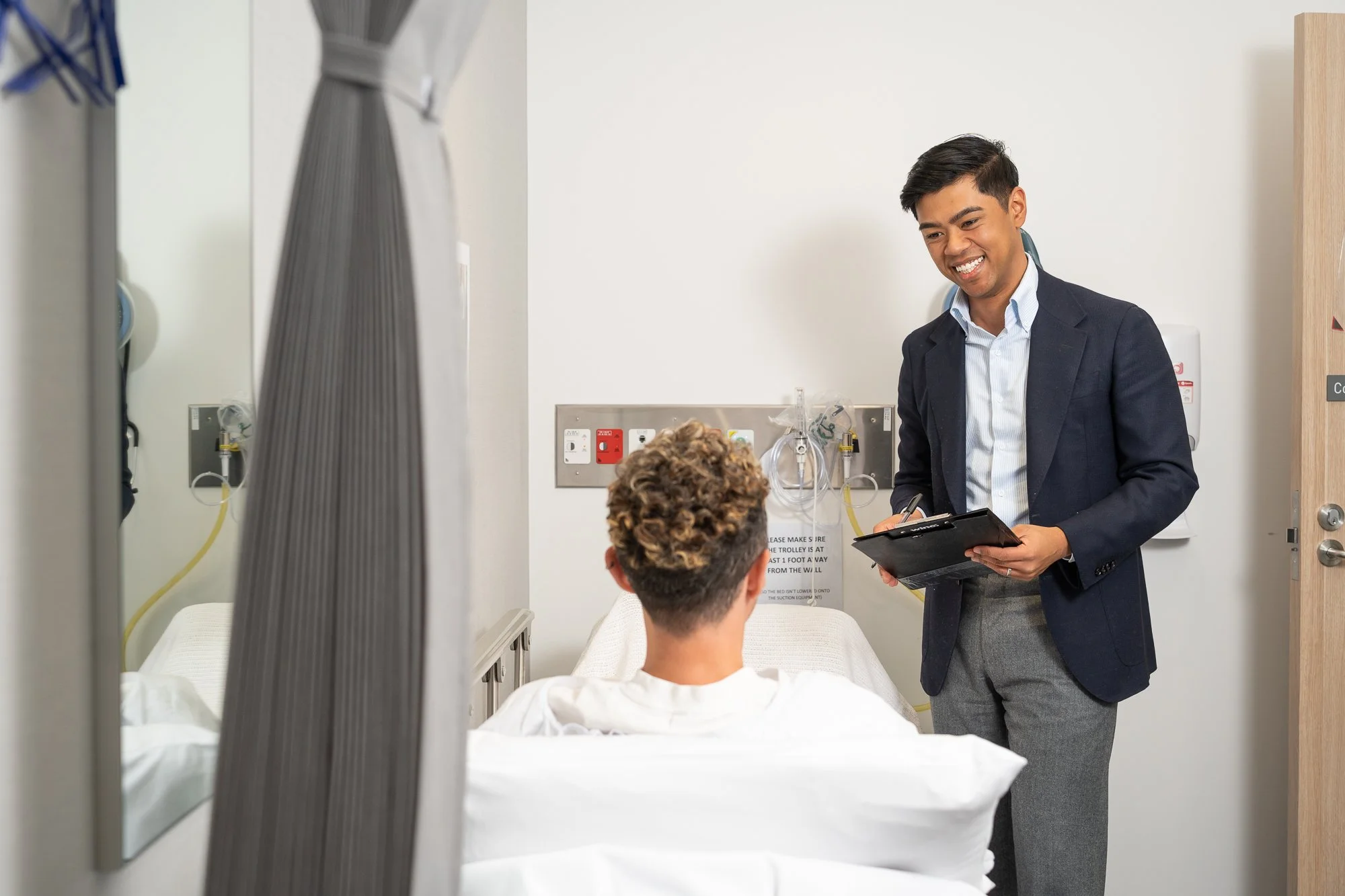
Engaging in natural consultation dialogue - authentic patient care documentation with privacy protection maintained.
The goal is authentic documentation of your practice without compromising patient privacy or requiring testimonial-style patient participation. It's entirely possible to create compelling imagery that builds trust while staying firmly within AHPRA guidelines.
Title and Credential Display:
Getting the Details Right
Professional titles seem straightforward, but AHPRA has specific requirements about how they appear in promotional materials—including photography.
The "Dr" title is particularly nuanced. While not legally protected (many professionals hold doctorates), using "Dr" in healthcare advertising requires immediate clarification of your actual profession to avoid misleading the public.
Correct examples:
Dr Jane Smith (Chiropractor)
Dr John Doe, Registered Psychologist
Dr Sarah Chen – Clinical Psychologist
What you cannot do:
Use "Dr" without clarifying your profession
Imply medical registration when you're not a medical doctor
Suggest specialist registration you don't hold
The "Specialist" designation is strictly protected. Only practitioners with formal specialist registration can use this title. General practitioners cannot call themselves "paediatric specialists" or "dermatology specialists" even if they have extensive experience in those areas.
Acceptable alternatives for GPs:
"GP with special interest in women's health"
"General Practitioner with extensive paediatric experience"
"Experience in skin cancer detection and management"
For cosmetic medical practitioners, additional requirements apply. From July 2023, cosmetic surgery advertising must display the practitioner's AHPRA registration number and clearly state their type of registration (general or specialist).
When I photograph medical specialists, we ensure all titles and credentials are accurately captured for marketing use. Professional headshots include proper name and title formatting. Environmental portraits show certificates and qualifications truthfully. This attention to detail protects both the practitioner and their patients.
What You CAN Photograph:
Building Trust Through Authentic Documentation
AHPRA compliance doesn't mean boring photography. It means strategic, authentic visual storytelling.
Here's what works brilliantly within the guidelines:
Professional portraits in multiple contexts: Business attire for leadership and credibility, scrubs for clinical authenticity, outdoor environmental shots for approachability. These images serve different purposes across your website, LinkedIn profile, conference materials, and practice marketing.
Clinical environment documentation: Modern facilities, state-of-the-art equipment, welcoming reception areas. These images communicate investment in quality care without making unsubstantiated claims.
Consultation and procedure scenarios: Authentic moments showing your approach to patient care, captured with appropriate privacy protection. A gastroenterologist reviewing endoscopy imaging, a physiotherapist demonstrating technique, a GP in thoughtful conversation—all filmed from angles that protect patient identity.
Technology and innovation: Equipment shots showcasing advanced diagnostic tools or treatment capabilities. These demonstrate modern practice standards without overpromising outcomes.
Team photography: Cohesive staff portraits showing the collaborative nature of your practice. Proper title identification for each team member ensures patients understand exactly who they'll be working with.
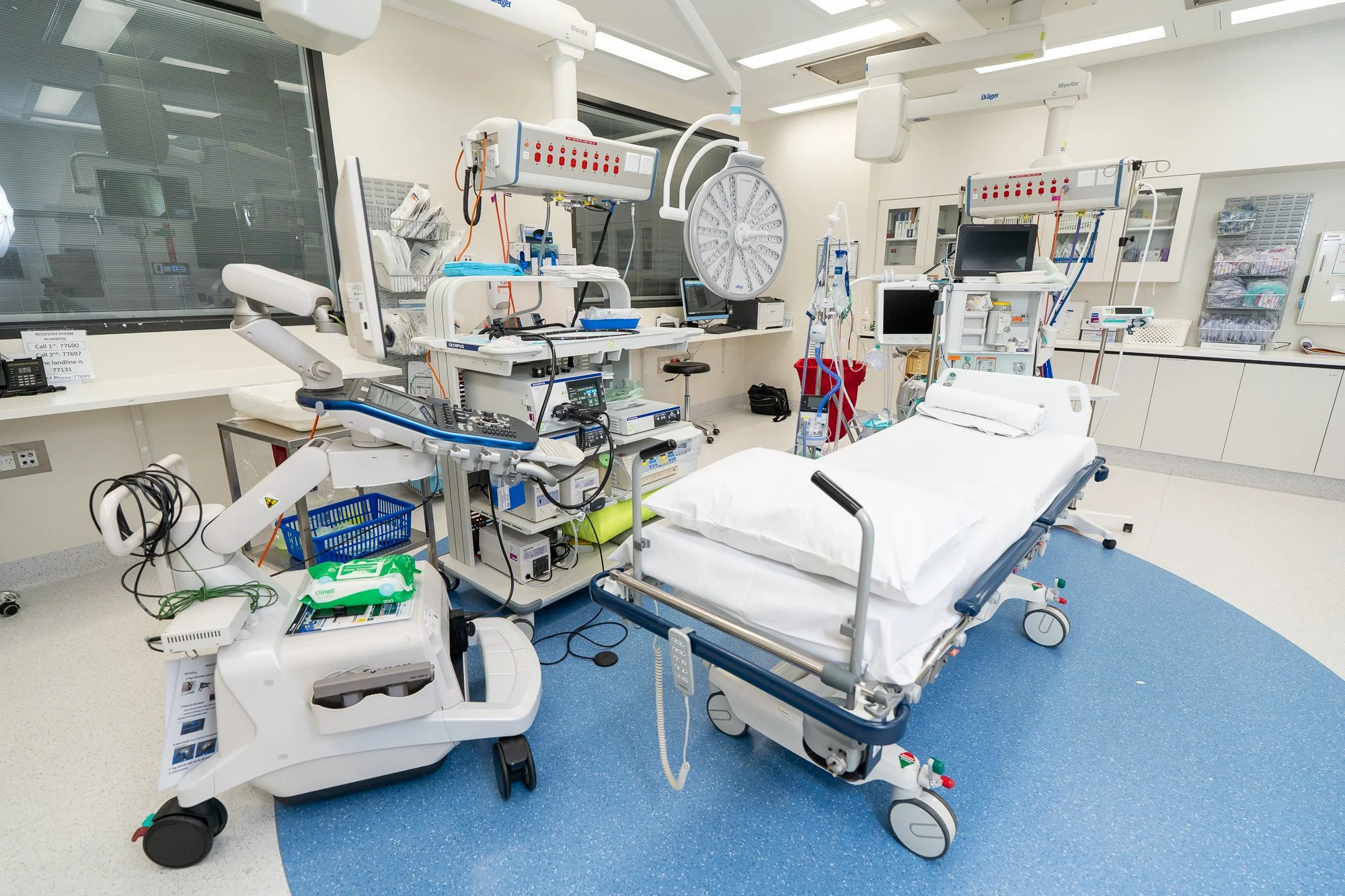
A clean environment shows investment in patient experience while remaining AHPRA compliant.
The key is focusing on what you offer (services, expertise, environment, approach) rather than what you guarantee (outcomes, cures, transformations). This shift in perspective actually creates more compelling, trustworthy marketing.
The MMP Studio Approach:
Compliance Built Into Every Shoot
At MMP studio, AHPRA compliance isn't an afterthought—it's integrated into our healthcare photography process from the first consultation.
Our workflow includes:
Pre-shoot compliance consultation: We discuss your specific services, target audience, and intended image usage to identify potential compliance risks before we even pick up a camera.
Standardised protocols for sensitive content: Before-and-after photography follows strict technical standards. Patient scenario shoots use proven privacy protection techniques. Title and credential displays are verified for accuracy.
Model release documentation: Every identifiable person in your promotional imagery has signed appropriate consent forms, protecting both your practice and our professional standards.
Usage rights clarity: Commercial versus non-commercial usage, platform permissions, and licensing terms are documented from day one. This matters particularly for procedures and technologies where advertising rules differ.
Guidance on image application: We help clients understand not just what photos they receive, but how to use them compliantly across websites, social media, printed materials, and presentations.
With over 20 years photographing Melbourne's healthcare sector, from The Alfred to Epworth, from major hospital systems to specialist private practices, we've developed deep expertise in navigating these regulations while creating imagery that genuinely serves your marketing goals.
Ready to update your practice photography with confidence?
MMP studio specialises in AHPRA-compliant healthcare photography for Melbourne medical and allied health providers. From individual professional portraits to comprehensive practice documentation, we deliver imagery that builds trust while protecting your registration.
Contact us to discuss your photography needs, or download our free compliance checklist to audit your current marketing imagery.
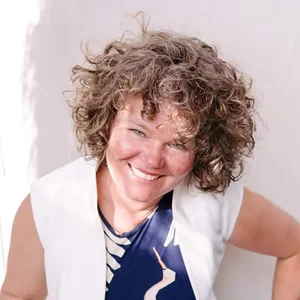
Michelle McFarlane is a Melbourne-based specialist photographer with over 20 years of experience in healthcare settings. MMP studio provides professional photography services to medical specialists, hospitals, research institutions, and allied health practices across Victoria.