Hospital Fundraising: Documenting Major Capital Projects
How Photography Transforms Donation Outcomes Into Compelling Fundraising Narratives
I photographed Dr Thodur Vasudevan (Vasu), Head of Vascular Surgery at the Alfred Hospital, inside the hospital's new hybrid operating theatre, a state-of-the-art facility made possible by a major philanthropic donation.
The Brief: Documenting a Transformative Investment
Client: The Alfred Foundation
Project: New Hybrid Operating Theatre
Scope: Facility documentation, expert portraits, multidisciplinary team capability imagery, stock photography for communications use
Audience: Donors, hospital staff, media, patients, referring practitioners, stakeholders
2023
Dr Thodur Vasudevan, Head of Vascular Surgery at the Alfred Hospital, specialises in complex vascular disease management. The hybrid theatre enables him to lead a multidisciplinary team of cardiologists, radiologists, and surgeons—providing integrated expertise for patients with challenging vascular conditions.
His collaboration in this shoot demonstrates something important: modern hospital experts understand that professional imagery supports their institution's storytelling, fundraising, and patient education goals. They're not reluctant subjects—they're invested stakeholders in communicating their hospital's capabilities and commitment to advancement.

Dr Thodur Vasudevan (Vasu), Head of Vascular Surgery
The hybrid theatre represents a major investment in multidisciplinary surgical capability—enabling cardiologists, radiologists, and surgeons to work collaboratively in treating complex vascular disease. Photographically, this meant capturing both the human expertise and the technological sophistication that justified the investment.
Why Hospital Fundraising Needs Professional Photography
1. Donors Need to See the Impact of Their Investment
Professional photography transforms abstract financial commitments into tangible, visual outcomes. A donor who gave $2 million wants to see—not just hear about—the space their generosity created.
Better still: they want to see the expert clinicians who will use that space to improve patient outcomes.
2026
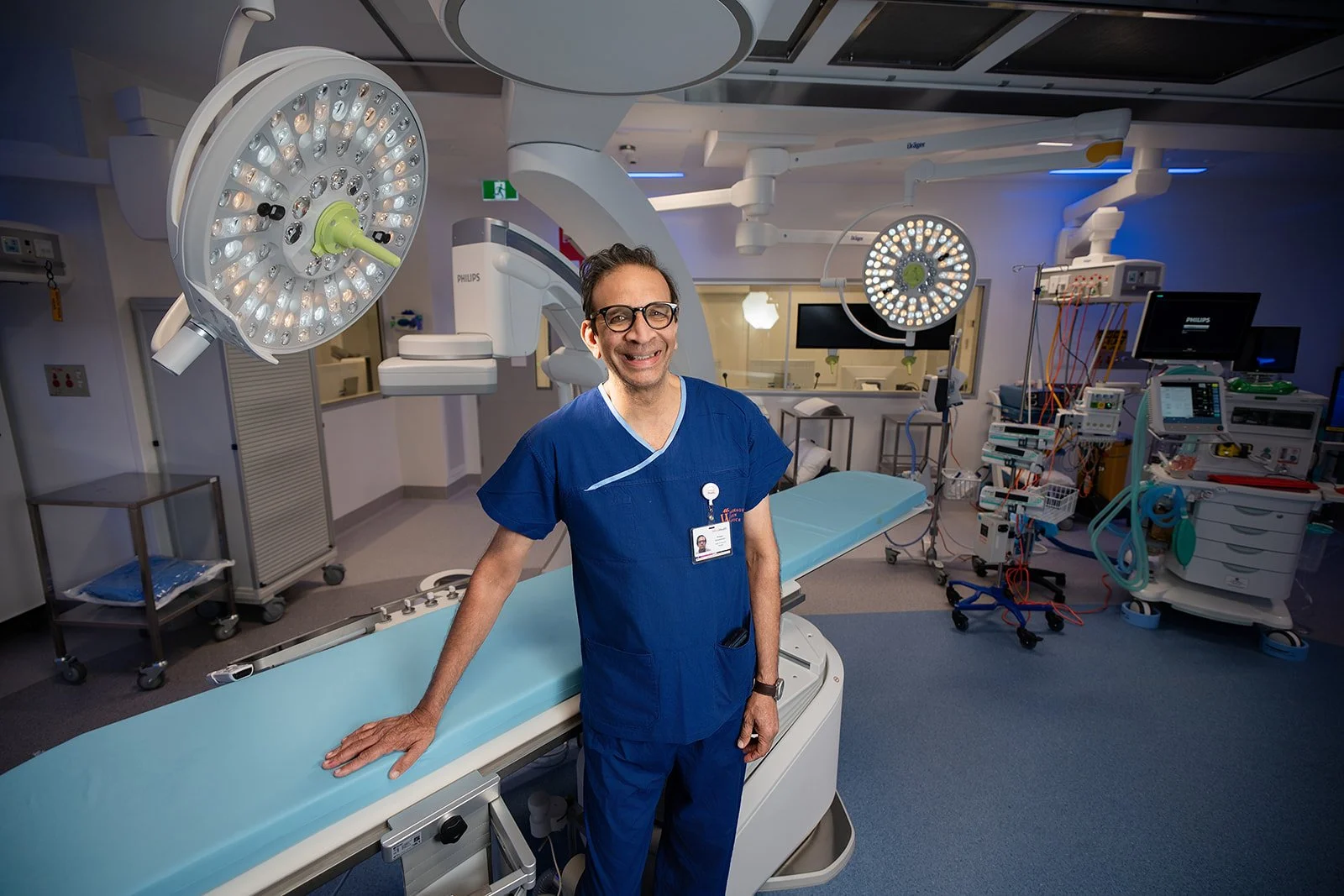
Dr Thodur Vasudevan, Head of Vascular Surgery, in the completed hybrid theatre - demonstrating the clinical expertise enabled by the hospital's investment in multidisciplinary surgical capability.
2. Hospital Communications Requires Multiple Asset Types
A single hospital photography session should deliver:
Leadership/expert portraits for annual reports, media releases, staff communications
Facility documentation showing scale, technology, design quality
Process and capability imagery demonstrating what this space enables
Stock photography for ongoing communications, website updates, marketing materials
One shoot. Multiple communication purposes. Efficient asset creation.
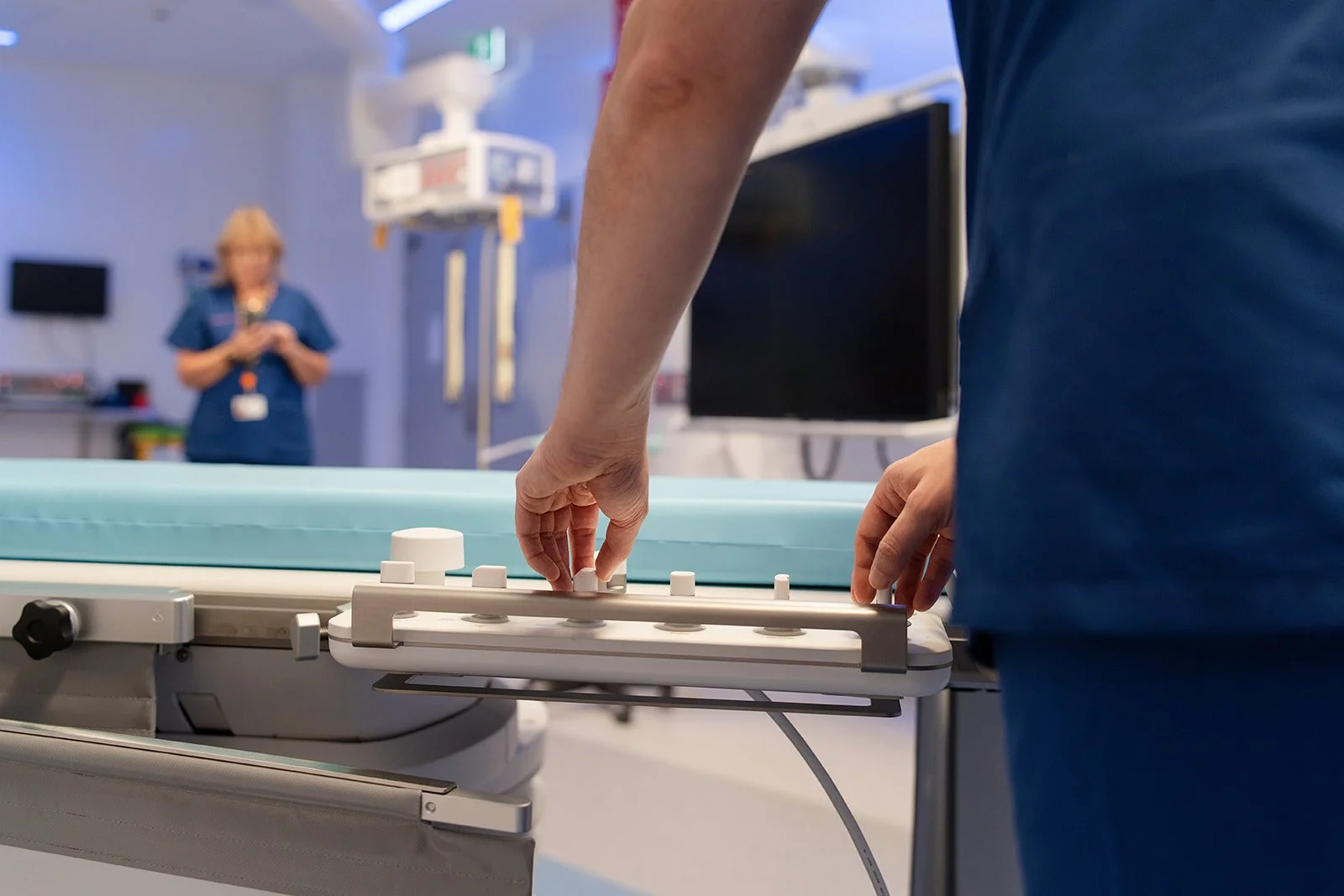
Precision equipment detail - the hybrid theatre enables radiologists, cardiologists, and surgeons to coordinate complex vascular interventions in a single integrated space
3. Modern Healthcare Facilities Are Newsworthy
Professional facility photography supports media engagement. Local news wants compelling visuals of major hospital investments. Clean, well-lit, professionally composed images of cutting-edge facilities are substantially more likely to accompany media coverage than phone-quality snapshots.
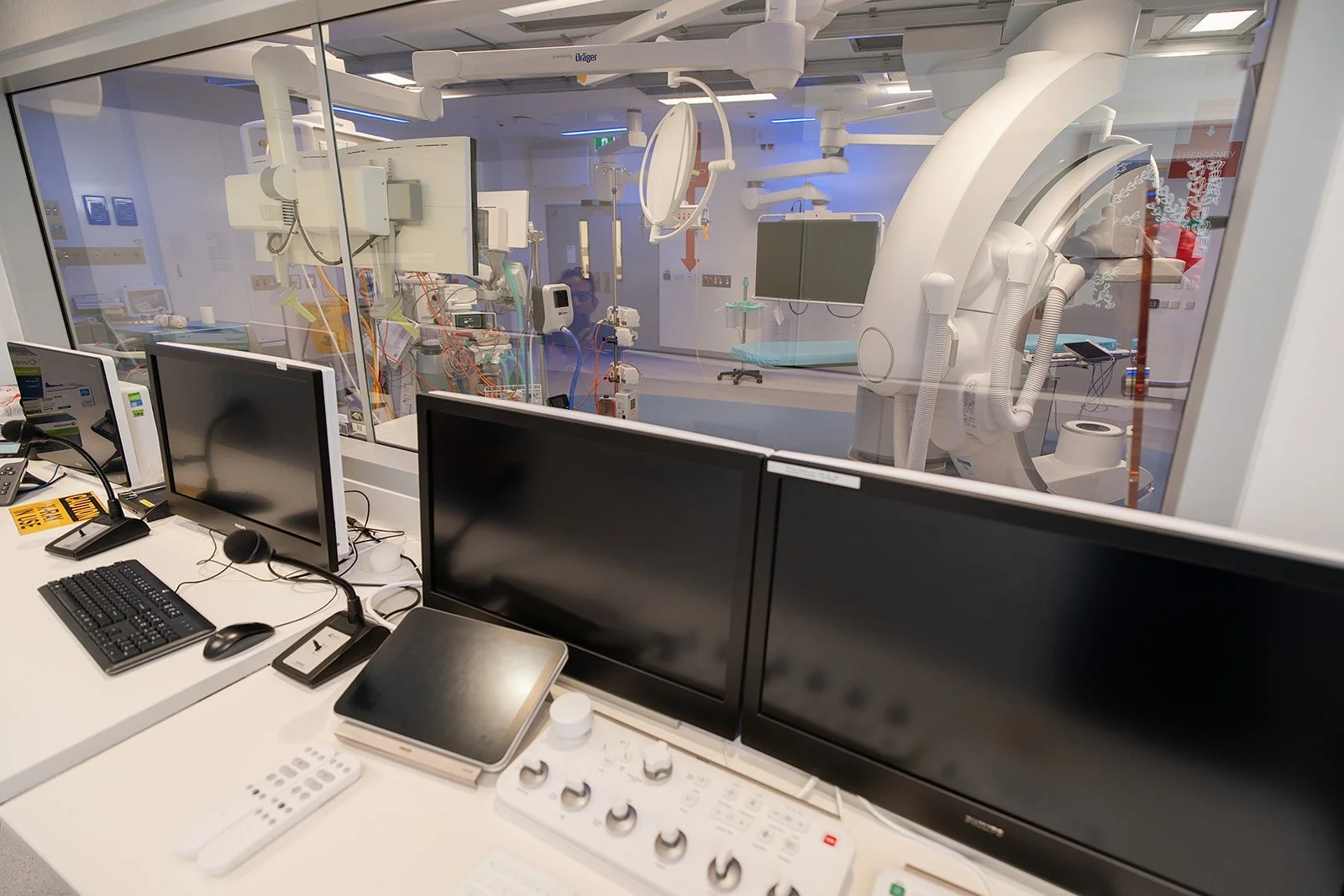
Advanced monitoring and imaging control - the hybrid theatre's integrated technology platform enables real-time collaboration between surgical teams
Photographing Medical Spaces: Technical Considerations
Lighting Complexity
Operating theatres present unusual lighting challenges. Modern hybrid theatres use:
Surgical overhead lights (colour-corrected LED arrays)
Diagnostic imaging displays (requiring controlled exposure)
Ambient blue accent lighting (architectural design feature)
Medical equipment indicator lights
Professional medical photography requires understanding how to balance these competing light sources without losing detail in highlights or crushing shadows in equipment displays.
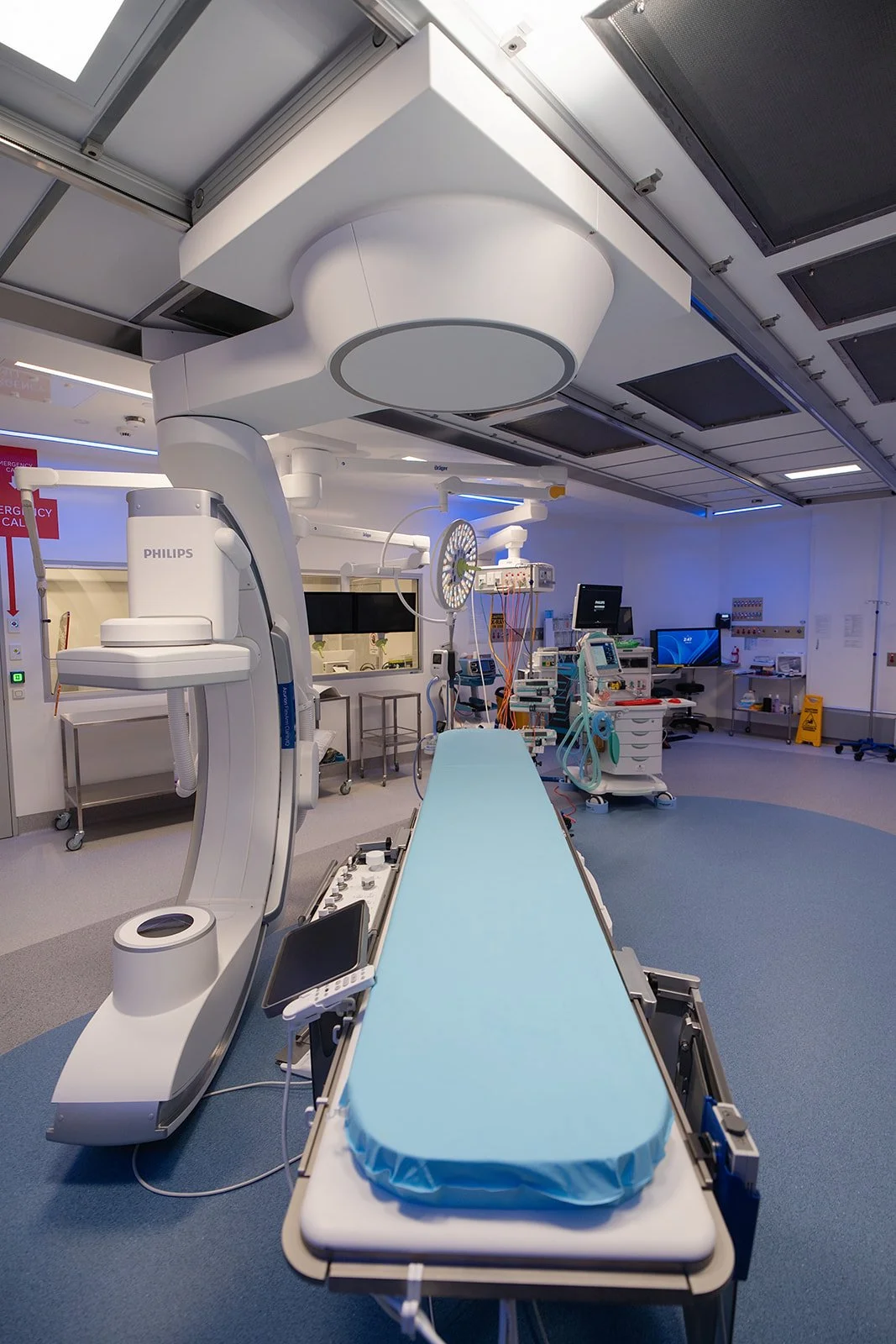
The complete hybrid theatre environment - showing integration of surgical lighting, diagnostic imaging displays, and collaborative workspace design for multidisciplinary vascular surgery teams
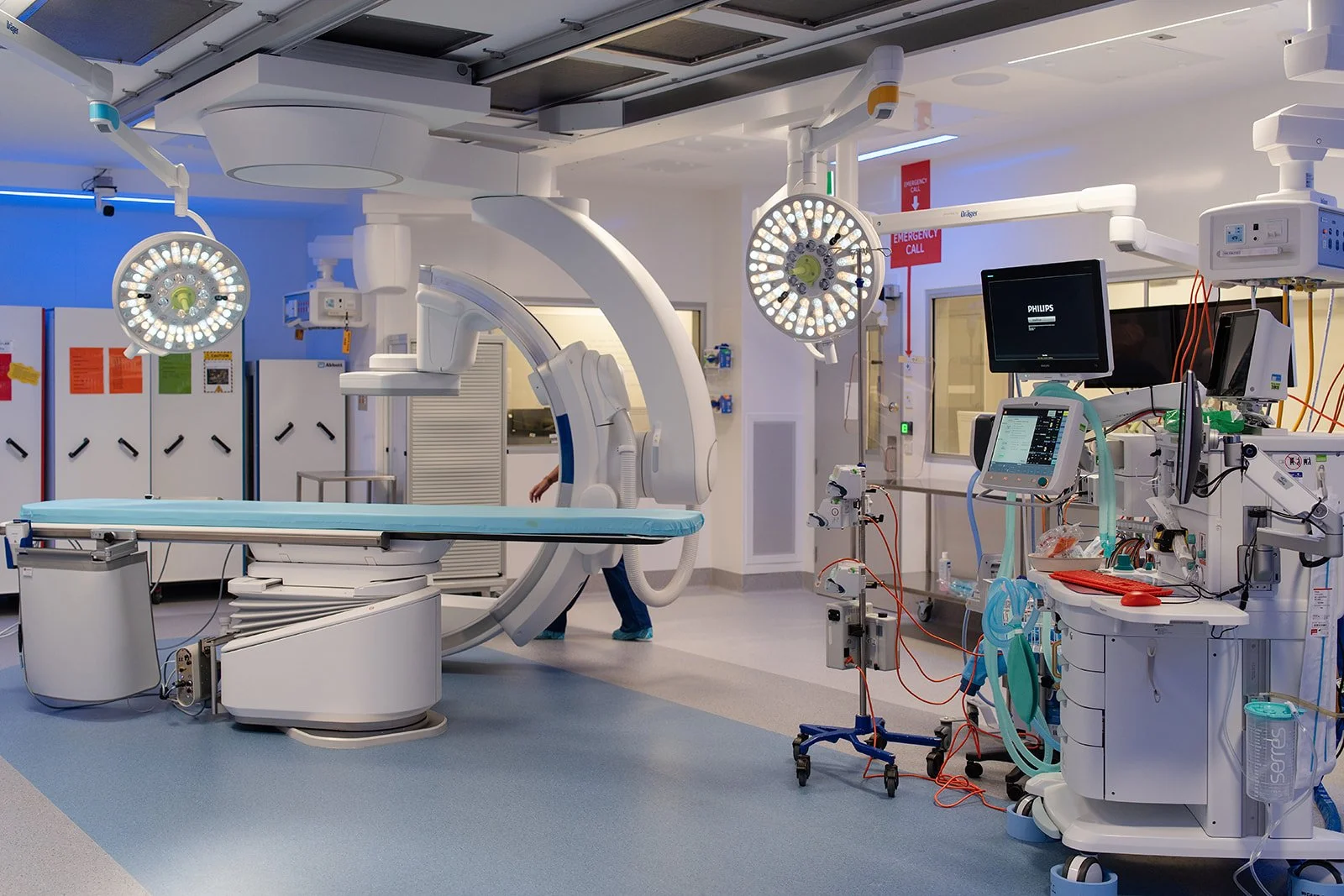
Facility Access & Timing
Unlike photographing individual practitioners, hospital photography requires:
Coordination with facilities and infection control
Scheduling around theatre availability (theatres are revenue-generating spaces)
Pre-opening/post-closure timing to avoid clinical disruption
Understanding sterile protocol boundaries
In this case, photographing during the construction phase provided an ideal window: the theatre was complete but not yet operational, allowing unrestricted access without clinical disruption or infection control concerns.
Scale & Architectural Documentation
Hospital spaces demand different compositional approaches than clinical portraits. Modern facilities are designed spaces—architectural achievements worth photographing thoughtfully.
This requires:
Wide-angle documentation showing spatial relationships and design quality
Detail shots emphasising technology and precision
Environmental portraits placing people within the designed space
Multiple perspectives and framings
Audience-Specific Storytelling: Hospital Communications Managers
If you're a hospital communications professional reading this, here's what professional photography delivers for your fundraising narrative:
For Annual Reports & Donor Communications:
Authority and credibility through high-quality facility documentation
Emotional connection through expert portraits showing who benefits from the investment
Technical sophistication through equipment and process detail
Scale and prestige through architectural and environmental imagery
For Media Engagement:
Newsworthy visual assets that accompany announcements
Professional quality reducing likelihood of image-based story rejections
Multiple angle options accommodating different publication formats
Expert positioning (Dr Vasu's portrait supports him as a media spokesperson)
For Staff Communications:
Pride in facility investment and capability
Clear visual understanding of multidisciplinary collaboration
Professional tone supporting recruitment and retention messaging
Celebration of staff expertise and a modern working environment
For Ongoing Website & Social Content:
Reusable asset library across multiple platforms and timelines
Professional aesthetic consistent with hospital brand positioning
Flexibility for seasonal updates, patient education, recruitment, and capability promotion
For Hospital Communications Teams: The Practical Question
If your hospital has invested in a major capital project - new facility, expanded service, upgraded technology - professional photography should be part of the project budget, not an afterthought.
This is particularly true when:
Donors are being thanked or thanked publicly
Facility represents strategic service expansion
New technology or capability is being launched
Staff expertise is part of the story
Media coverage is anticipated